If you are homeschooling a child with ADHD, you already know the pattern: a great start, a lost pencil, a sudden question about volcanoes, and then the math page is somehow under the couch.
The good news is that homeschooling gives you room to build a day around how your child's brain actually works. These routines are simple, but they make a real difference.
What executive function means at home
Executive function is the brain's management system. It covers planning, getting started, remembering steps, switching between tasks, managing time and checking your own work. Children with ADHD often have real trouble with these skills, even when they are bright and capable.
The key idea: don't rely on willpower; build supports. Supports are things you can see and touch, like a schedule on the wall or a timer on the table.
Make time visible
Many children with ADHD struggle to feel how long five minutes is. Help them see it.
- Use a visual schedule: a short list or picture cards showing the order of the day.
- Use a visual timer for work blocks and breaks.
- Keep the plan short: three to five items on the board at a time, not the whole day.
Short blocks, planned breaks
Long sit-down sessions tend to fall apart. Try this rhythm instead:
- Work block (10 to 15 minutes for younger kids; 20 to 30 for teens)
- Movement break (jumping jacks, a lap around the yard, carrying the laundry)
- Next block
Put the hardest subject at your child's best time of day. For many kids, that is mid-morning after breakfast and some movement.
Break big tasks into first steps
"Write a report" is too big. "Write three facts about volcanoes on sticky notes" is a first step. Teach your child to ask, What is the very first thing I do? This one question builds the habit of getting started.
Use a "done" list
To-do lists can feel endless. A done list, where your child moves cards or checks boxes as they finish, gives a quick win and a clear end point. Seeing progress is motivating for every learner.
Practice the skills on purpose
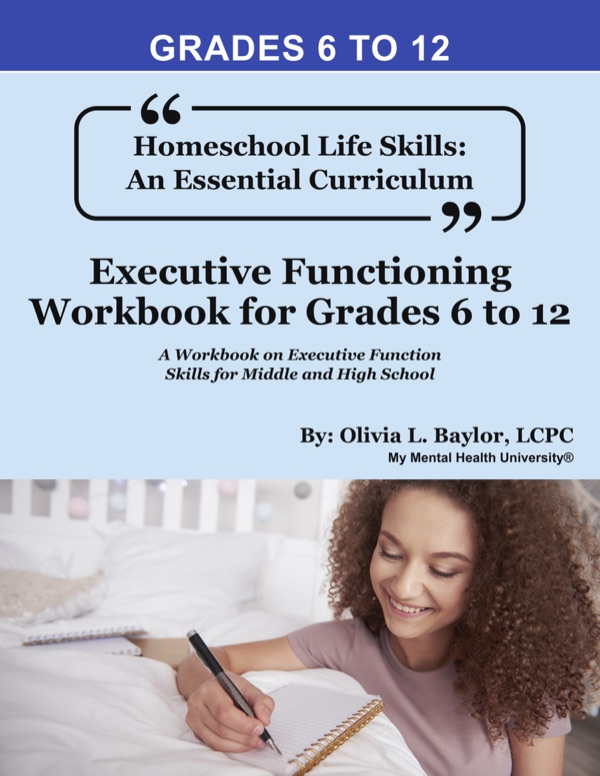
Executive function skills grow with practice, just like reading. Short, playful practice helps: memory games, planning a snack together, estimating how long a chore will take and then timing it. Our Executive Functioning Workbook for Grades 6 to 12 gives older kids step-by-step practice in planning, organization, time management, working memory, getting started and self-checking.
Free printable: a calm start to the day
Children with ADHD often feel calmer when the morning begins the same way every day. Our free Calm Start Check-In is a five-minute routine you can do before lessons. Get the free printable.
Talk with your child's doctor
Homeschooling does not replace an evaluation or treatment. The CDC describes parent training in behavior management as an effective treatment for many children with ADHD, and as the recommended first step for young children (CDC). Ask your child's doctor what fits your family.